
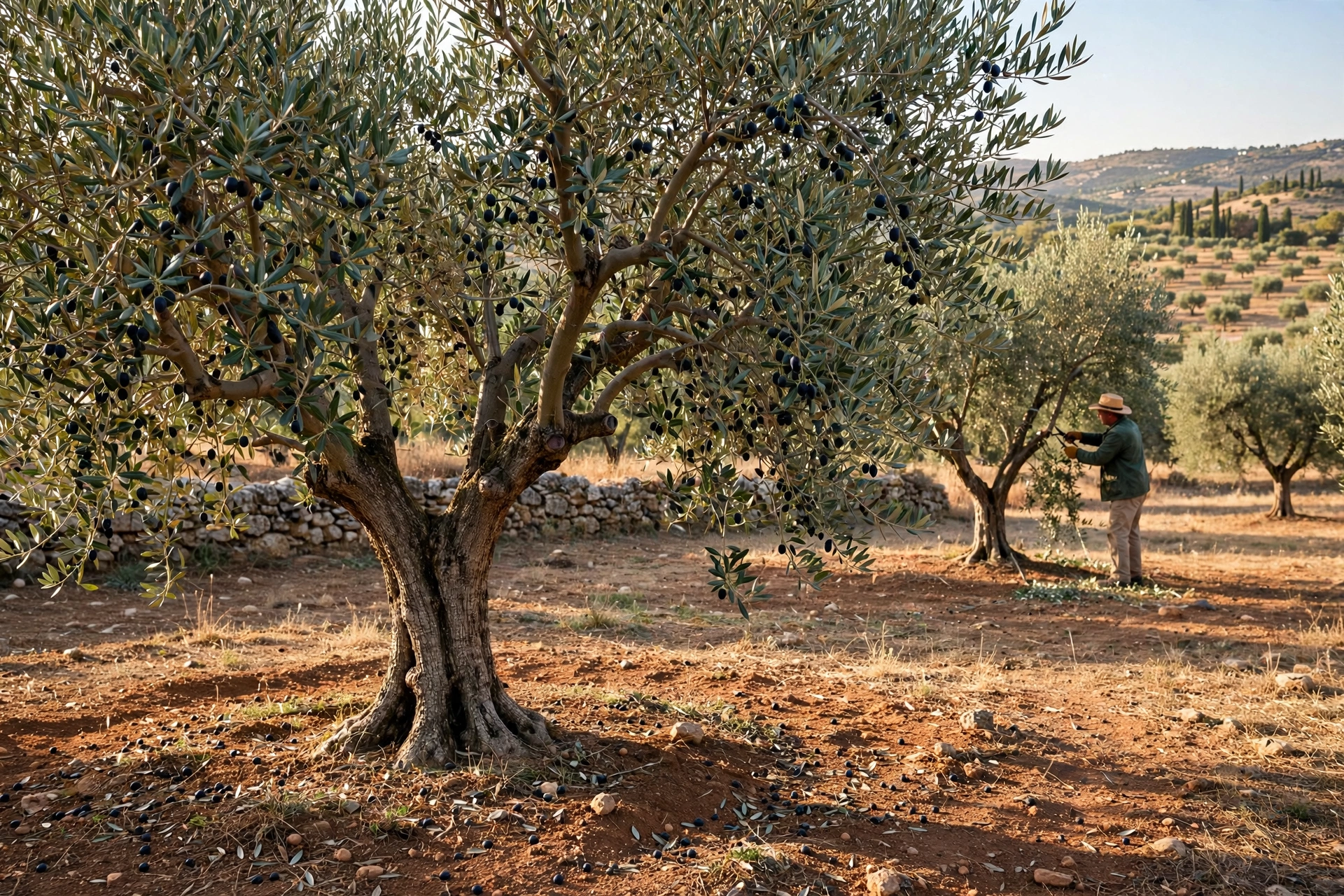
Olive trees are among the most rewarding trees a gardener can grow. With their silvery-green leaves, gnarled trunks and long lives, they bring a touch of the Mediterranean to any garden, and a mature tree can produce fruit for decades. Olives are famously tough plants. They cope with poor soil, hot sun, drought and wind, and they need far less attention than most fruit trees. This guide covers choosing a variety, planting, pruning and harvesting, whether your tree grows in open ground or in a large pot.
Choosing the Right Olive Variety
The variety you choose matters more than almost anything else, because olives vary a great deal in hardiness, size and fruit. In the United Kingdom and other cool climates, hardiness comes first. Varieties such as 'Arbequina', 'Frantoio' and 'Koroneiki' are popular for good reason: they are relatively compact, fruit young, and tolerate cold better than many others. 'Arbequina' suits a small garden because it stays compact and produces small, tasty fruit that ripens early. For table olives, look for 'Manzanilla' or 'Gordal', which produce larger fruit that is easier to cure and eat. Most olives set some fruit alone, but a second tree nearby usually improves the crop.
Where and When to Plant
Olives need sun above all else. Choose the sunniest, most sheltered spot in your garden, ideally against a south or west-facing wall that stores warmth and protects the tree from cold winds. Olives also need excellent drainage. They hate sitting in wet soil, and their roots will rot in heavy, waterlogged clay. If your soil is heavy, plant on a slight mound or in a raised bed, and dig in plenty of grit and coarse compost to open up the ground. The best time to plant is late spring, once the risk of hard frost has passed and the soil has warmed up. A spring-planted tree has a whole summer to establish its roots before winter, so avoid planting in winter, when cold, wet soil can damage young roots.
Planting Step by Step
Dig a hole at least twice as wide as the pot and the same depth, so the roots can spread easily into loosened soil. Do not add fresh manure or a large amount of fertiliser at planting time, because this can burn young roots and encourage soft, frost-tender growth. Water the tree well in its pot, then gently ease it from the container and tease out any circling roots at the base. Set the tree in the hole at the same depth it was growing in the pot, with the graft union, if there is one, above soil level. Backfill with the improved soil, firm it gently, and water thoroughly so the soil settles around the roots. Keep the base clear of grass and weeds, and mulch with gravel or bark, keeping the mulch a few centimetres away from the trunk.
Watering and Feeding
Young olive trees need regular watering in their first two years while their roots establish, especially during dry summers. Water deeply once or twice a week rather than little and often, so the moisture reaches the deeper roots and encourages them to grow downwards. Overwatering is a far bigger risk than underwatering, so always let the soil dry out between waterings and never leave a potted olive standing in a saucer of water. Feed sparingly. A light application of a balanced fertiliser in spring is usually enough, and too much nitrogen produces lush, soft growth that is easily damaged by frost and rarely fruits well.
Pruning Olive Trees
Pruning turns a bushy young olive into a productive, attractive tree, and it is best done in late spring, after the worst frosts and before the tree flowers. The aim is an open, goblet-shaped canopy that lets light and air into the centre of the tree. Start by removing any dead, damaged or crossing branches, then thin out crowded growth in the middle of the crown. Remove low shoots from the trunk and any vigorous upright shoots that crowd the centre. Shorten long, whippy branches by a third to encourage side shoots, which are where the fruit forms. Olives fruit on the previous year's growth, so avoid hard pruning every year; a light annual prune is better than a severe one every few years.
Pests and Diseases to Watch For
Olives are generally healthy trees, but a few problems are worth knowing about. Olive knot is a bacterial disease that causes rough, dark swellings on branches, usually after pruning wounds or frost damage. Cut out affected branches well below the swelling, clean your tools between cuts, and prune in dry weather to reduce the risk. Peacock spot, also called olive leaf spot, shows as dark, circular spots with yellow halos on the leaves, and heavy attacks can cause leaf fall. Olive fruit fly is the main pest in warmer regions: the female lays eggs in the ripening fruit, and the maggots feed inside. Pick up fallen fruit promptly and hang traps in the tree during summer. Scale insects sometimes cluster on stems and leaves, weakening the tree. Small numbers can be wiped off by hand, and encouraging birds and ladybirds helps keep them in check.
Harvesting Your Olives
Harvesting is the most satisfying part of growing olives, and timing it well makes all the difference. Olives for oil are usually picked when they are turning from green to purple-black, because that is when the oil content is at its best. Olives for eating are picked either green, for a firm, bitter fruit that needs curing, or black, for a softer, milder one. The simplest way to harvest is to spread a sheet under the tree and gently comb the branches with your hands or a small rake, letting the fruit fall onto the sheet. Avoid stripping the branches roughly, because this damages next year's fruiting wood. Fresh olives are far too bitter to eat straight from the tree. They need to be cured in brine or salt for several weeks before they are edible, and there are many reliable recipes for home curing.
Growing Olives in Pots
If you have no garden, or your winters are cold, a potted olive is an excellent option. Choose a large, heavy pot with drainage holes, because a small pot dries out quickly and a top-heavy tree will blow over. Use a free-draining compost mixed with grit or perlite, and plant at the same depth as before. Water potted olives more often than those in the ground, especially in summer, but always let the compost dry out between waterings. Feed monthly from spring to early autumn with a balanced liquid feed, and repot every two to three years into a slightly larger container, trimming back a few of the roots. In cold weather, move the pot to a sheltered spot, wrap it in hessian or bubble wrap to protect the roots, and cover the crown with fleece on frosty nights.
Frequently Asked Questions
How long does an olive tree take to fruit? A grafted tree bought from a nursery usually starts fruiting within three to five years, and the crop increases as the tree matures. A tree grown from seed can take ten years or more and may never produce good fruit, which is why buying a named variety is always better.
Why is my olive tree not producing olives? The most common reasons are a young tree, too little sun, overfeeding with nitrogen, or hard pruning that removed the fruiting wood. Olives also need a warm summer to set fruit well, so a cool, cloudy year may give a poor crop even on a healthy tree.
Can olive trees survive frost? Mature olives can survive short spells down to around minus six degrees Celsius, but young trees and new growth are much more tender. Plant in a sheltered spot, avoid feeding late in the season, and protect young trees with fleece when frost is forecast.
Conclusion
Growing olives is a slow pleasure, but it is one of the most satisfying things you can do in a sunny garden. Choose a hardy variety, plant it in the sunniest, best-drained spot you have, and give it a few years of patient care. Water deeply while it establishes, feed lightly, and prune each spring to keep the canopy open. Before long, you will have a beautiful, long-lived tree that gives you fruit to cure for the table and a living reminder of the Mediterranean in your own garden.
If you are unsure whether a tree in your garden is an olive, or you want to identify another tree before you plant it, take a clear photo of its leaves and bark and try the identifier at aitreeidentier.site. Try the plant identifier at aitreeidentier.site