
Introduction: Why Flowers Need Help
A flower's job is to produce seeds, but most flowers cannot do it alone. Pollen, the fine powder that carries male reproductive cells, must reach the female part of a flower, the stigma, for fertilisation to happen. That transfer is called pollination, and it is one of the most important processes in nature. Without it, many fruits, vegetables, nuts, and wildflowers would not set seed.
Pollinators — bees, butterflies, moths, flies, beetles, birds, bats, and even wind and water — move pollen from flower to flower. This guide explains how pollination works, how flowers attract their pollinators, and how you can support them in your garden.
The Flower: Built for Pollination
A typical flower has male parts, the stamens, which produce pollen in anthers, and female parts, the pistil, which includes the stigma, style, and ovary. When pollen lands on a compatible stigma, it grows a pollen tube down to the ovary, where fertilisation happens and seeds begin to form.
Flower Shapes Are Pollinator Instructions
Look closely at a flower and you can often guess its pollinator. Long, tubular flowers such as honeysuckle and foxglove suit long-tongued bees, butterflies, and hummingbirds, which can reach the nectar hidden deep inside. Flat, open flowers such as daisies and umbellifers offer an easy landing platform for short-tongued insects, beetles, and hoverflies. Some flowers add guides that only insects can see: ultraviolet patterns on petals, invisible to us, point towards the nectar like runway lights, and bees can learn these patterns after a single visit.
Scent is another instruction. Flowers that open at night, such as jasmine and evening primrose, are usually pale and strongly scented to attract moths, while flowers pollinated by flies can smell of decay, mimicking the carrion those insects seek. Colour matters too: bees see blue, violet, and yellow well but see red poorly, so red flowers are usually aimed at birds, which see red clearly. None of this is coincidence; flower shape, colour, and scent have been shaped by millions of years of partnership between plants and their pollinators.
Bees: The Most Effective Pollinators
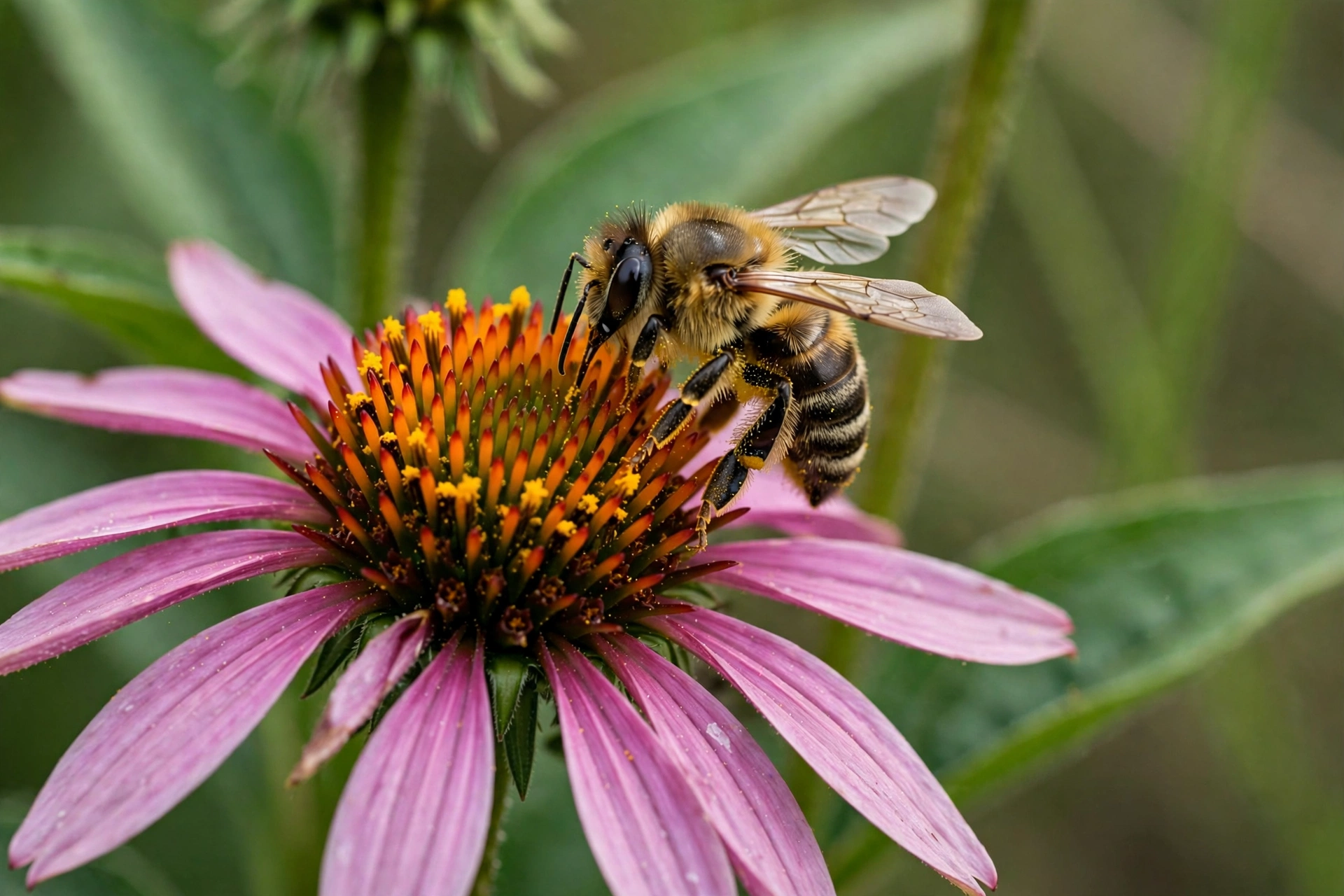
Bees are especially good pollinators because they visit many flowers, carry pollen on branched hairs, and deliberately collect pollen to feed their young. As a bee moves from flower to flower, pollen rubs off onto stigmas.
Wind, Water, and Other Pollinators
Not all plants need animals. Grasses, many trees such as oaks, birches, and pines, and crops such as corn and wheat are wind-pollinated. Their flowers are usually small, green, and unscented, with large amounts of light pollen that can travel on the breeze. This is why pollen counts rise in spring: wind-pollinated trees release huge quantities to make sure some reaches its target.
Why Pollination Matters for Food
About three-quarters of flowering plants depend on animal pollinators, and about a third of food crops benefit from them. Apples, strawberries, almonds, coffee, tomatoes, courgettes, and many others produce more, larger, or better-shaped fruit when well pollinated. Even crops that can self-pollinate often do better with insect visits.
How to Support Pollinators in Your Garden: Step by Step
1. Identify your flowers. Use the Flower Identifier on aitreeidentier.site to learn what is already growing and when it flowers. 2. Plant for the whole season. Choose early bulbs, spring blossom, summer flowers, and late asters, ivy, and sedum so something is in flower from early spring to late autumn. 3. Choose single, open flowers. Double flowers often have extra petals instead of nectar and pollen, making them hard for bees to use. Single flowers with visible centres are usually better. 4. Plant in drifts. Groups of the same flower are easier for bees to find and more efficient to visit than single plants scattered widely. 5. Provide water and shelter. A shallow dish with pebbles for landing, bare patches of soil, log piles, and hollow stems left over winter all help bees and other insects. 6. Avoid pesticides, especially on flowers. Spray only if essential, never on open flowers, and choose targeted, pollinator-aware options. Read labels and follow local guidance. 7. Leave some wild areas. Let part of a lawn grow, leave leaf litter, and delay cutting back stems until spring. Many pollinators overwinter in stems and soil.
Common Mistakes
Planting only summer flowers. A garden that is empty in spring and autumn offers little to early bumblebees and late pollinators. Plan for the shoulders of the season.
Choosing flowers for colour alone. Bright bedding plants are often bred for looks, not nectar. Check whether a variety is known to attract pollinators.
Using pesticides on flowering plants. Even products labelled for garden use can harm bees if applied to open flowers or during the day when bees are active.
Tidying too much in autumn. Cutting back every stem and clearing all leaves removes overwintering sites for bees, butterflies, and other insects.
Pollination Gaps: When Flowers Fail to Set Fruit
A plant can flower beautifully and still produce no fruit, and the cause is often pollination. Cold, wet, or windy weather keeps bees indoors during the short window when flowers are receptive, and a single rainy week can ruin a whole fruit crop. A shortage of pollinators is another common cause, especially in tidy gardens with few flowers: if bees have nothing to eat before your fruit trees bloom, they will not be around when you need them.
Some plants add their own complications. Many apples, pears, and cherries are self-incompatible, meaning their own pollen cannot fertilise them, so they need a different variety flowering at the same time nearby. Others, such as squash and courgettes, produce separate male and female flowers, and if the male flowers open days before the females, early fruit can fail. When flowers drop without setting fruit, check the weather, the pollinator activity, and whether a partner variety is missing before blaming the plant itself.
Frequently Asked Questions
What is the difference between pollination and fertilisation?
Pollination is the transfer of pollen to the stigma. Fertilisation is the joining of male and female cells inside the ovary after pollination, which leads to seed formation.
Why do some flowers produce no fruit?
Common reasons include lack of pollination, lack of a compatible pollination partner, poor weather during flowering, frost damage, or the plant being too young. Check flowering time, weather, and whether another variety is needed.
Can I hand-pollinate vegetables?
Yes. For squash, courgettes, and tomatoes, you can transfer pollen with a small brush or by touching a male flower to a female flower. This helps when pollinators are scarce or weather is poor.
Do I need two apple trees for fruit?
Most apple varieties do, because they are self-incompatible and need pollen from a different variety that flowers at the same time. A neighbour's tree within about 30 metres often does the job. A few varieties, such as some self-fertile plums, can fruit alone, but even they usually crop better with a partner.
What time of day are bees most active?
Bees are busiest on warm, calm, sunny days, usually from mid-morning to mid-afternoon, when flowers produce the most nectar. They rarely fly below about 10 degrees Celsius or in rain, which is why a cold, wet spring can cause poor fruit set even in a garden full of flowers.
Conclusion
Pollination is a partnership: flowers offer food, and pollinators carry pollen in return. Bees, wind, butterflies, and other agents each suit different flowers, and together they support wildflowers, fruit, vegetables, and whole ecosystems. You can help by planting a succession of open, nectar-rich flowers, providing water and shelter, avoiding pesticides on flowers, and leaving some wild corners. Identify your flowers, watch who visits them, and you will see pollination happening in your own garden, one flower at a time.
Try it: Try the free Tree Researcher on aitreeidentier.site — identify a tree from a photo and learn more about the science behind it.
Safety note: This guide is for general learning only. Never eat or use a plant based on AI identification alone, and consult a local expert before using any plant for food or medicine. If you are allergic to bee stings, take care around flowering plants and seek medical advice about precautions.