
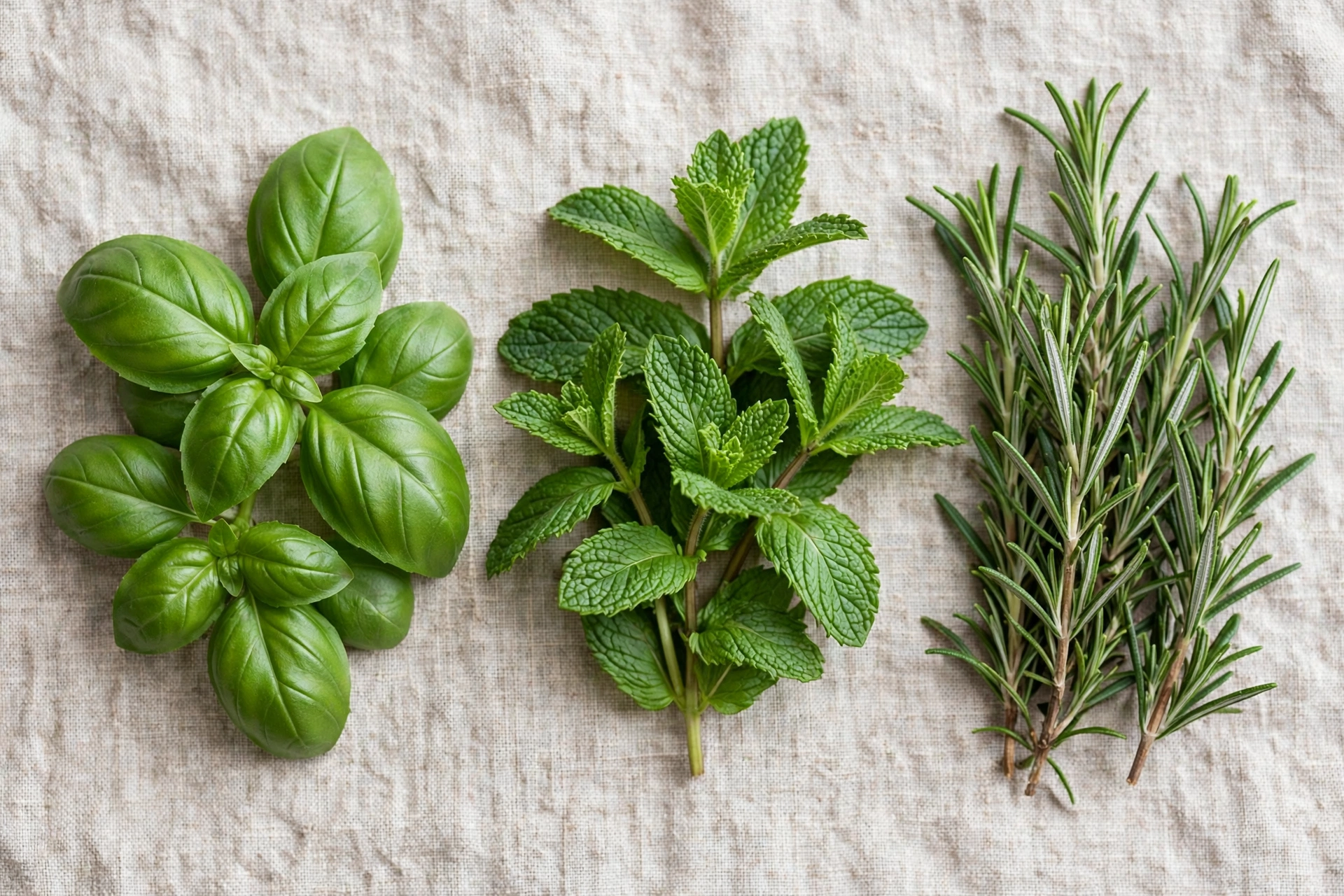
Herbs are small plants with big identities. Basil, mint, rosemary, thyme, sage, parsley, and dill can look similar as seedlings, yet they differ in leaf shape, scent, stem, and growth habit — and in how they are used in cooking. Identifying herbs correctly matters for flavour, for garden care, and for safety, because some culinary herbs have wild lookalikes that are not safe to use.
This guide explains how to identify culinary and medicinal herbs by leaf and scent, without tasting unknown plants. You will learn the main herb features, how to photograph herbs clearly, how to use scent safely, and how to avoid the mistakes that lead to wrong identifications. Whether you are sorting a herb garden, identifying a plant in a pot, or checking a market purchase, the same careful method applies.
Herbs are a good group to learn first, because most of them belong to a small number of plant families with shared traits. Many culinary herbs are members of the mint family, for example, which means they share square stems and opposite leaves. Once you know that family pattern, a new herb becomes a puzzle with fewer pieces, and you can focus on the details that separate one species from another — leaf shape, scent, and growth habit.
What to Look for in a Herb
Leaf Shape and Arrangement
Leaf shape and arrangement are the most useful herb features. Note whether leaves are opposite each other on the stem or alternate, whether they are simple or divided, and whether the edge is smooth, toothed, or lobed. Mint has opposite, toothed, pointed leaves, while parsley has divided leaves with a very different outline. Photograph a stem with several leaves so the arrangement is visible, and photograph a single mature leaf flat and in focus.
Stem Shape
Stem shape is a surprisingly strong clue for herbs. Many herbs in the mint family, including mint, basil, rosemary, sage, and thyme, have square stems that you can feel by rolling the stem gently between your fingers. Other herbs have round stems. A square stem does not prove a herb is a mint-family plant on its own, but combined with opposite leaves and a strong scent it narrows the possibilities considerably.
Colour and Texture
Note leaf colour on both sides, texture, and whether leaves are hairy, glossy, or dull. Sage leaves are soft and slightly fuzzy, rosemary leaves are glossy above and pale underneath, and basil leaves are smooth and glossy. Colour alone is not reliable, because herbs vary with light and variety, but texture and hairiness are often distinctive.
Growth Habit
Note whether the herb grows upright, bushy, trailing, or spreading, and how tall it is. Mint spreads vigorously by runners and can take over a bed, rosemary grows into a woody shrub, thyme forms low, creeping mats, and basil grows upright and bushy in a single season. Growth habit helps separate herbs that look similar as single leaves, and it also tells you how to care for the plant once you know its name.
Step-by-Step: Identify a Herb from a Photo
Step 1: Photograph the Whole Plant
Photograph the whole herb plant in its pot or garden bed, showing height, spread, and growth habit. Then photograph a stem with several leaves, showing arrangement and stem shape. Good light and a plain background help, and a hand for scale is useful for small herbs such as thyme.
Step 2: Photograph a Single Leaf Close Up
Photograph a mature leaf from above and from underneath, flat and in focus, with the stalk visible. Note shape, margin, veins, texture, and colour. A clear leaf photo is the most useful single image for herb identification, especially when combined with a stem photo.
Step 3: Note Scent Safely
If you are in your own garden and the plant is a known garden herb, gently rub one leaf and note the scent. Do not taste an unknown plant, and do not rub or crush a wild plant you cannot identify. If you are unsure, skip the scent test and rely on photos and leaf features.
Step 4: Upload and Compare
Upload your clearest leaf and whole-plant photos and compare the top suggestions against leaf shape, arrangement, stem, scent, and growth habit. The best match should agree on several features. Mint, for example, should have opposite toothed leaves, a square stem, and a cool scent, while basil should have soft oval leaves and a sweet scent.
Step 5: Confirm with Flowers or Growth
If the herb is flowering, photograph the flowers as an extra clue. If it is a seedling, wait for true leaves and a clearer growth habit before deciding. Keep a label or note of where the herb is growing so you can check it again later.
Common Mistakes to Avoid
The most common mistake is relying on scent alone. Scent varies with variety and conditions, and several herbs share similar scents. Another mistake is identifying a seedling too early, when leaves have not yet developed their mature shape. A third mistake is confusing mint with other mint-family herbs, or parsley with similar-looking wild plants, based on leaf shape alone. Always check stem shape, arrangement, and growth habit as well. Finally, never taste or use a herb based on a photo alone. Some wild lookalikes are toxic, and even culinary herbs can cause problems if used in the wrong way or in large amounts.
Another common error is assuming that a herb bought at a market or garden centre is the same variety you know from the kitchen. Many herbs are sold under one common name but belong to several species or cultivars — there are many kinds of mint, basil, and thyme, each with a different scent and leaf shape. Check the plant label if there is one, and compare your plant with photos of the specific variety rather than the general name. Finally, be careful with herbs growing wild near gardens: garden herbs often escape and grow beside wild lookalikes, so a plant in a hedgerow that smells like mint may be a wild mint relative rather than the culinary herb you expect.
Frequently Asked Questions
Can I identify a herb by smell alone?
Smell is helpful, but not reliable on its own. Several herbs share similar scents, and scent varies with variety and growing conditions. Use scent together with leaf shape, stem, arrangement, and growth habit.
How do I tell mint and basil apart?
Mint usually has toothed, pointed leaves, a square stem, and a cool, fresh scent, while basil has smooth, oval, glossy leaves, a softer stem, and a sweet, peppery scent. Growth habit also differs: mint spreads vigorously, while basil grows upright and bushy.
Why do herb seedlings look so similar?
Seedlings start with simple seed leaves and develop true leaves later. Wait for true leaves, stem shape, and scent to develop before identifying a young herb, and photograph the plant again after a week or two.
How do I tell rosemary from lavender?
Both are woody Mediterranean herbs with narrow leaves, but rosemary leaves are longer, glossy above and pale underneath, and grow on a shrub with a strong pine-like scent. Lavender leaves are shorter and greyer, and the plant is best recognised by its purple flower spikes in summer. When neither is in flower, leaf length and scent are the best clues.
Can I identify a dried herb from a photo?
It is much harder, because drying changes colour, texture, and scent, and removes the growth habit and stem clues. Photograph the dried leaves alongside any label or packaging, and compare the shape and scent with fresh examples. For a confident identification, try to find the fresh plant or the original packaging.
Conclusion
Herb identification works best when you combine leaf shape, arrangement, stem, scent, texture, and growth habit. Photograph the whole plant and a clear leaf, note scent safely without tasting, compare several features, and be patient with seedlings. With practice, you will recognise common culinary herbs quickly — and you will know when to pause and ask an expert before using any plant.
Try it: Try the free Plant Identifier on aitreeidentier.site — photograph a herb leaf and stem for instant guidance.
Safety disclaimer: Never eat, use, or apply any herb, plant, mushroom, or fruit based on AI identification alone. Some herbs are toxic or easily confused with lookalikes, and medicinal use needs professional advice. Consult a local expert before any use.