
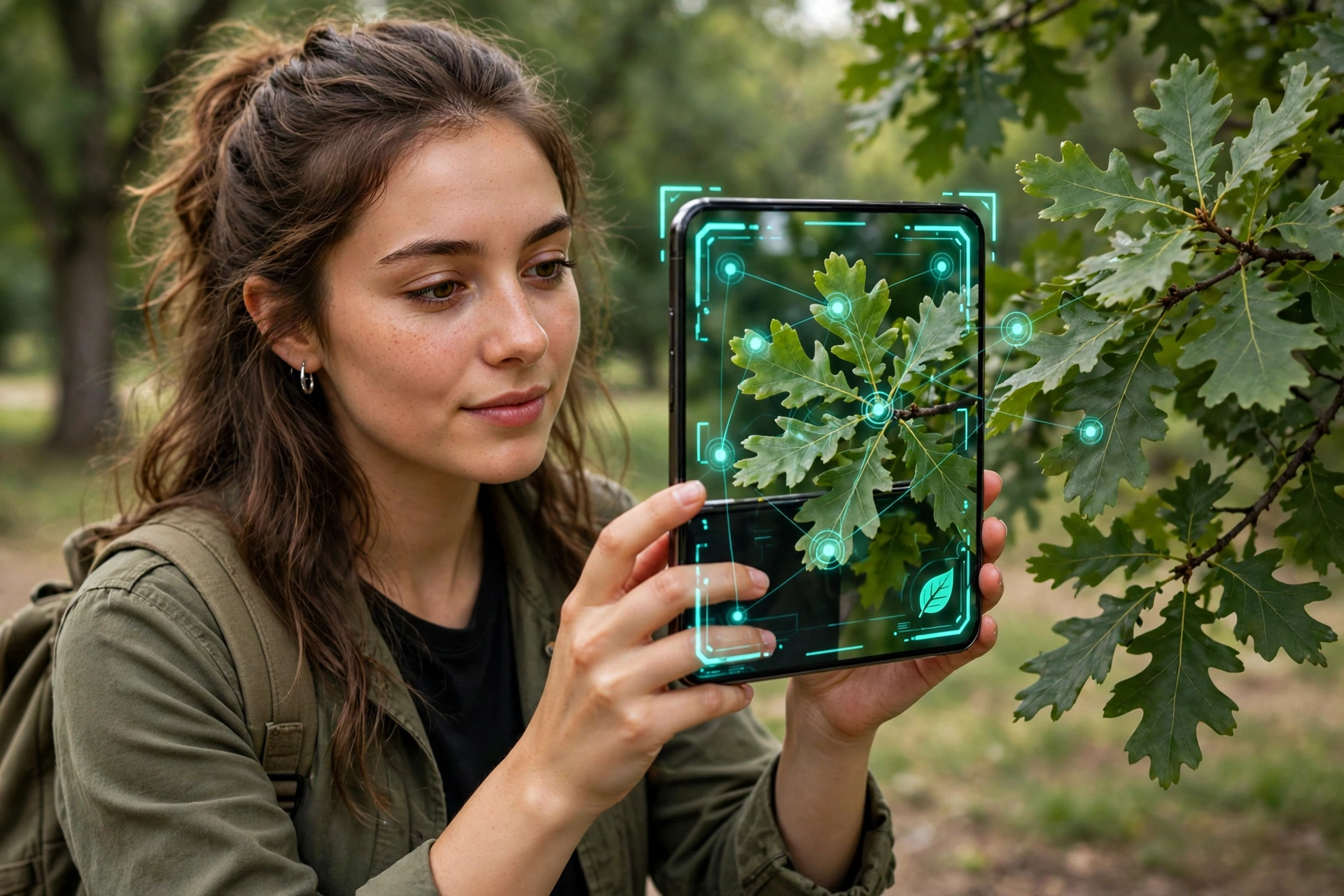
Trees, plants, and flowers surround us every day — in gardens, parks, streets, meadows, and woodlands — yet most of us can name only a few of them. Learning their names changes how we see the world: a walk becomes a discovery, a garden becomes a collection of known plants with known needs, and a photo becomes a starting point for learning. AI identification has made this learning faster and more accessible than ever, allowing anyone with a phone to name a plant in seconds.
This complete guide brings together everything you need to identify trees, plants, and flowers with AI, in one place. It covers how AI identification works, which features matter most, how to photograph trees, plants, and flowers clearly, how to check results, and how to avoid common mistakes. Whether you are a complete beginner or a keen gardener who wants more reliable results, this guide will help you identify with confidence.
How AI Identification Works
AI identification tools compare your photo with many thousands of labelled plant photos and look for patterns in leaf shape, flower structure, bark, colour, and overall form. They return the most likely species based on visual similarity, not on a botanical understanding of the plant. This means they work best for common, distinctive plants photographed clearly, and less well for rare species, unusual cultivars, young plants, or poor photos.
Your role is to give the tool the best possible input and to check its output. A clear photo of a mature leaf or fresh flower is more useful than a distant shot of a whole garden, and a second photo of bark, fruit, or stem can confirm or overturn the first suggestion. Think of AI as a knowledgeable assistant that narrows the possibilities quickly, while you make the final decision by comparing features.
Key Features for Trees, Plants, and Flowers
Leaves
Leaves are the most reliable feature for most identifications. Note whether a leaf is simple or compound, its shape, the edge of the leaf — smooth, toothed, or lobed — and how leaves are arranged on the stem: opposite, alternate, or in whorls. Also look at the veins, the stalk, and whether the leaf is glossy, hairy, or dull underneath. For trees, leaf arrangement alone can rule out many species at once.
Flowers and Fruit
Flowers give fast clues when they are present, but they are seasonal, so use them while you can. Count the petals, study the centre, and note the colour, scent, and arrangement — single flowers, clusters, or spikes. Fruit is just as useful: berries, nuts, cones, pods, and winged seeds each point to particular families, and a fruit photo often confirms an identification that leaves alone could not.
Bark, Stem, and Overall Shape
Bark, stem, and overall shape provide the context that leaves and flowers cannot. Note bark colour and texture, whether the stem is square, round, hairy, or smooth, and whether the plant is a tree, shrub, climber, or ground cover. In winter, when leaves and flowers are gone, bark and shape become the main clues, so learning to notice them pays off all year round.
Step-by-Step: Identify Any Tree, Plant, or Flower
Step 1: Photograph the Whole Plant
Start with a whole-plant photo showing size, shape, and habitat. This gives context and helps you and the tool understand what kind of plant you are looking at — a tree, shrub, herb, climber, or ground-cover plant.
Step 2: Photograph Key Features Close Up
Move closer and photograph the most distinctive features: a mature leaf, a fresh flower, a section of bark, or a ripe fruit. Take each photo in natural light, filling the frame, with a plain background where possible. Take a second photo of the underside of a leaf, or the centre of a flower, if those details are distinctive.
Step 3: Note Season, Location, and Growing Conditions
Record the date, location, habitat, sunlight, soil, and whether the plant is in a pot or in the ground. These notes are often as useful as the photo, because they narrow the possibilities and help you check the suggestion later.
Step 4: Upload, Compare, and Confirm
Upload your clearest photo first, then read all the top suggestions rather than only the first one. Compare each suggestion against the features you recorded — leaf shape, flower structure, bark, size, season, and habitat — and look for the match that agrees on several points. If the suggestions disagree, upload a second photo of a different feature. If you can, return to the plant in another season and photograph its leaves, flowers, or fruit to confirm the identification.
Common Mistakes and How to Fix Them
The most common mistake is relying on a single, blurry, or distant photo. Fix it by moving closer, using good light, and photographing several features. Another common mistake is relying on colour alone, which varies with cultivar, season, and light. Fix it by checking shape, structure, leaves, and habitat as well. A third mistake is identifying a young plant, seedling, or cultivar too confidently. Fix it by waiting for mature leaves and flowers, and by noting that the plant is cultivated. A fourth mistake is accepting the first suggestion without checking. Fix it by reading all suggestions and comparing them carefully. Finally, the most serious mistake is using AI identification to decide edibility or medicinal use. Fix it by never eating or using a plant based on AI alone, and by consulting a local expert.
Two more mistakes are worth watching for. One is photographing a damaged or faded flower instead of a fresh one: a wilted bloom may have lost its true colour and petal count, so choose a fresh, fully open flower whenever you can. The other is ignoring the plant's surroundings. A plant growing in a garden bed is more likely to be a cultivar, a plant beside a pond is more likely to be a moisture lover, and a plant in a street planter may be a species chosen for toughness rather than a native wildflower. Habitat is a clue, not a decoration, so use it every time.
Frequently Asked Questions
What is the best photo for identifying trees, plants, and flowers?
A sharp, well-lit close-up of a mature leaf or fresh flower, filling the frame against a plain background, plus a whole-plant photo for context. For trees, add a bark photo; for fruiting plants, add a fruit photo.
How accurate is AI identification for trees, plants, and flowers?
It is often accurate for common, distinctive species photographed clearly, and less accurate for rare species, cultivars, seedlings, and poor photos. Accuracy improves with several clear photos of different features and careful checking of the result.
Can I identify a plant in winter?
Yes, but it is harder without leaves or flowers. Focus on bark, buds, twigs, shape, and any remaining fruit, cones, or seed cases. Note the location and return in spring or summer to confirm with leaves and flowers.
How do I identify a plant I only saw once on a walk?
Use the photos and notes you took at the time: whole plant, close-ups, date, and habitat. If your photos are incomplete, check the suggestions against a field guide for your area and season. If the identification is still uncertain, keep it as a possible match and photograph the plant again on your next visit.
Should I learn plant names or just use the app?
Use both. The app gives you a fast first suggestion, but learning the names and features of common plants in your area makes every later identification quicker and more reliable. Start with ten common species near your home, and add a few more each month.
Conclusion
Identifying trees, plants, and flowers with AI is a skill that combines good photography, careful observation, and thoughtful checking. Photograph the whole plant and its key features clearly, note season and habitat, read all suggestions, compare several features, and confirm with another feature or season when you can. Use AI to learn faster, to narrow possibilities, and to make every walk and garden more interesting — and keep human expertise for the decisions that matter. With practice, you will recognise familiar species at a glance, and you will know when to pause, check again, and ask an expert.
Try it: Try the free Plant Identifier on aitreeidentier.site — upload a photo of a tree, plant, or flower for instant guidance.
Safety disclaimer: Never eat, use, or apply any tree, plant, mushroom, or fruit based on AI identification alone. Some species are toxic or easily confused with lookalikes. Consult a local expert before any use.