
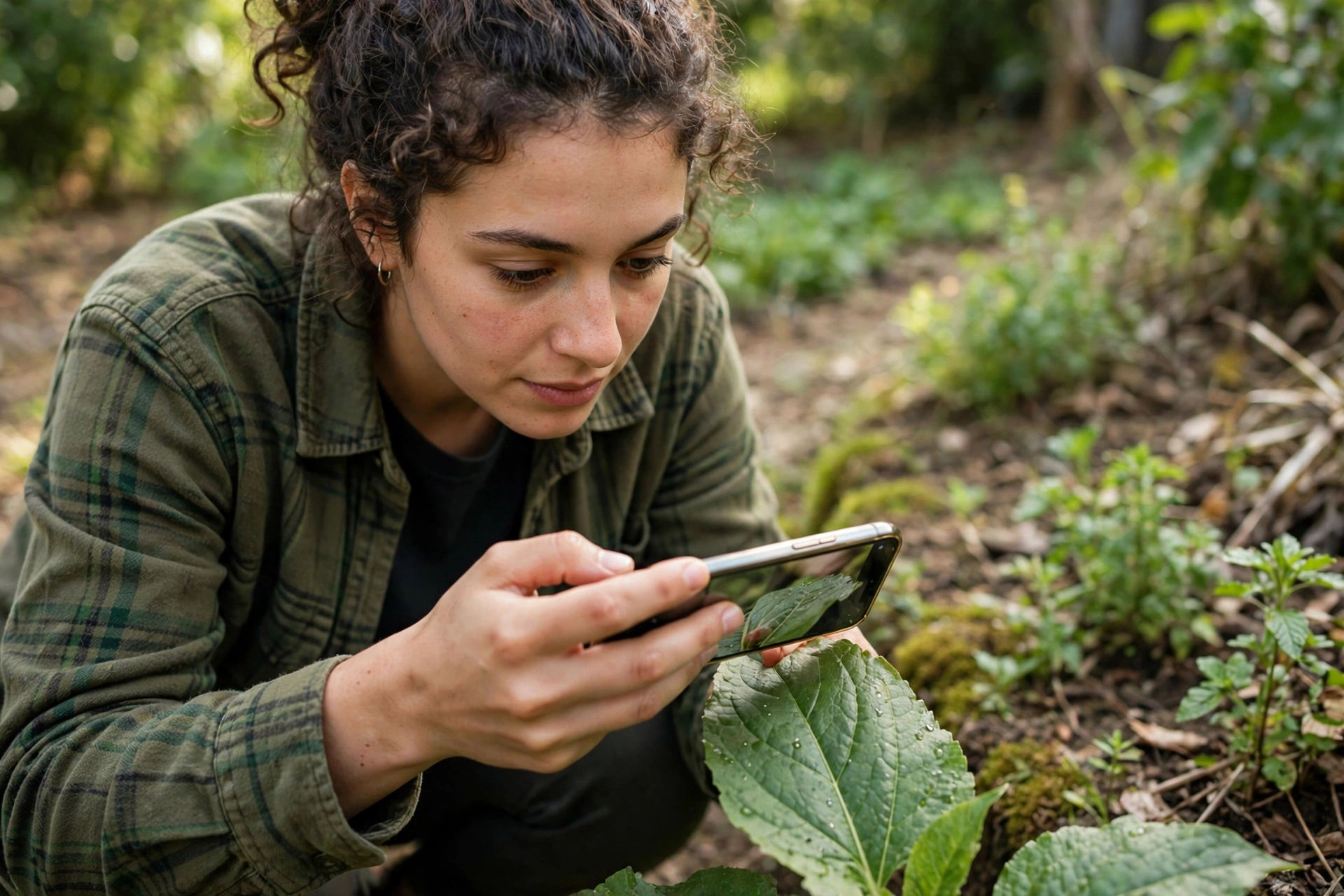
Plant identification is rewarding, but it is easy to get wrong, especially when you are starting out. A blurry photo, a single leaf, a plant in the wrong season, or a confident first suggestion can all lead to a wrong name — and a wrong name can lead to wrong care, wrong expectations, or, in the worst case, unsafe use. The good news is that most mistakes follow predictable patterns, and each one has a simple fix.
This guide covers the most common plant identification mistakes, why they happen, and how to fix them. You will learn how to take better photos, how to check several features, how to avoid being misled by colour, season, or cultivars, and how to confirm an identification before you trust it. Whether you use AI tools, field guides, or both, these fixes will make your identifications more reliable.
Mistake 1: Relying on a Single Photo or Feature
Why It Happens
It is natural to photograph the most eye-catching part of a plant — usually a flower or a single leaf — and expect that to be enough. In practice, most plants share their most obvious feature with several close relatives, and a single photo cannot show the combination of details that separates them. A flower photo hides the leaves, a leaf photo hides the stem and growth habit, and a whole-plant photo is often too distant to show any detail clearly.
How to Fix It
Always photograph at least three things: the whole plant for context, a close-up of the most distinctive feature, and a second feature such as the leaves, stem, bark, or fruit. For a tree, add bark; for a flowering plant, add leaves; for a herb, add the stem. When all three photos point to the same species, you can be reasonably confident. When they disagree, the disagreement itself is useful information — it tells you to look more closely rather than settle on the first answer.
Mistake 2: Using a Blurry, Dark, or Distant Photo
How to Fix It
Move closer, use natural daylight, tap to focus, and fill the frame with the feature you want identified. Take several photos and choose the sharpest one. Use a plain background, avoid flash and deep shade, and photograph a mature, healthy leaf or fresh flower rather than a damaged or faded one.
It also helps to hold the phone steady with both hands or rest it against something solid, especially when photographing small flowers or leaf undersides. If the wind is moving the plant, wait for a calm moment or hold the stem gently with one hand.
Mistake 3: Relying on Colour Alone
Why It Happens
Colour is the first thing we notice, and it feels distinctive. In practice, colour varies with cultivar, soil, light, season, and camera settings, and many unrelated plants share the same colour. A pink flower, a red berry, or a purple leaf can belong to many species.
How to Fix It
Use colour as a starting point, then confirm with shape, petal number, leaf arrangement, veins, bark, size, season, and habitat. The correct identification should match on structure, not just colour. If only colour matches, keep looking.
Mistake 4: Ignoring Season, Age, and Location
Why It Happens
A plant looks different in spring, summer, autumn, and winter, and young plants often look different from mature plants. A garden cultivar may also look different from a wild form. Ignoring season, age, and location removes context that could rule out many species.
How to Fix It
Always record the date and the place where you found the plant, and note whether it is young, mature, flowering, or in seed. Check whether the suggested species is known to grow in your area and at that time of year. A plant suggested for a different continent, or one that flowers in spring when your photo was taken in autumn, is almost certainly wrong. If you can, return to the same plant in a different season — seeing it in leaf and in flower is one of the most reliable ways to confirm an identification.
Mistake 5: Confusing Lookalikes and Cultivars
Why It Happens
Many plants have close relatives that look alike, and garden cultivars are bred for unusual leaf colour, variegation, flower form, or size. A variegated leaf, a double flower, or a dwarf form can confuse both AI tools and beginners, leading to a plausible but wrong identification.
How to Fix It
When you suspect a lookalike, list the two or three candidates and compare them feature by feature. Look for the small difference that separates them: a toothed rather than smooth leaf edge, opposite rather than alternate leaves, a different number of petals, or a different stem shape. For garden plants, remember that cultivars are bred to look unusual, so check whether the plant is in a garden or a pot, and search for the cultivar name as well as the species name. A field guide that lists lookalikes side by side is especially useful here.
Mistake 6: Accepting the First Suggestion Without Checking
Why It Happens
AI tools return a ranked list, and the first suggestion feels like the answer. In reality, the correct species is sometimes second or third, especially for similar species, cultivars, or poor photos. Accepting the first result without checking is one of the fastest ways to get a wrong identification.
How to Fix It
Read all the top suggestions, compare each one against your plant's features, and check with a field guide or reliable photos. If the suggestions disagree, upload a second photo of a different feature. Treat the tool as a way to narrow possibilities, not as a final verdict.
Mistake 7: Using Identification to Decide Edibility or Medicinal Use
Why It Happens
Once a plant has a name, it is tempting to look up whether it is edible or medicinal and act on that information. This is the most serious mistake, because AI identification can be wrong, and many edible plants have toxic lookalikes that differ in small details.
How to Fix It
Never eat, drink, or apply a plant based on AI identification alone. Use identification for learning, gardening, and curiosity, and consult a local expert and professional advice before any edible or medicinal use. When in doubt, do not use the plant.
Mistake 8: Trusting a Photo Found Online Without Checking the Source
Why It Happens
When checking a suggestion, many people search for photos of the suggested species and compare them with their own plant. The problem is that online photo libraries contain mislabelled images, especially for similar species and cultivars, so a wrong match can look convincing.
How to Fix It
Compare your plant with photos from at least two reliable sources, such as a recognised field guide, a botanical garden website, or a trusted identification app, and check the written description as well as the pictures. Pay attention to the details the text mentions — leaf arrangement, petal number, habitat — rather than the general impression of the photo.
Frequently Asked Questions
Why did my plant identification come out wrong?
Usually because the photo was blurry, distant, or showed only one feature, or because the plant was young, a cultivar, or out of season. Retake clear photos of several features in good light and compare all suggestions carefully.
How can I check if an identification is correct?
Compare leaf shape, margin, veins, flower shape, bark, size, season, and habitat against reliable photos or a field guide. The correct identification should match on several features, not just one. Ask a local expert if you are unsure.
Are AI plant identification tools reliable?
They are useful starting points and often correct for common, distinctive plants photographed clearly. They are less reliable for rare species, cultivars, seedlings, and poor photos. Always verify the result yourself before acting on it.
What should I do if two suggestions both seem to fit?
Look for the feature that separates them, such as leaf arrangement, petal number, or stem shape, and photograph that feature closely. If you still cannot separate them, note the location and season, wait for the plant to flower or fruit, and ask a local expert or a plant identification group for help.
Conclusion
Most plant identification mistakes are easy to fix: take clearer photos, photograph several features, do not rely on colour alone, note season and location, watch for lookalikes and cultivars, check all suggestions, and never use identification alone to decide edibility. With these fixes, your identifications will become more accurate, more confident, and more enjoyable — and you will learn to spot the small details that make each plant distinctive.
Try it: Try the free Plant Identifier on aitreeidentier.site — upload clear photos of several features for instant guidance.
Safety disclaimer: Never eat, use, or apply any plant, mushroom, or fruit based on AI identification alone. Some plants are toxic or easily confused with lookalikes. Consult a local expert before any use.