
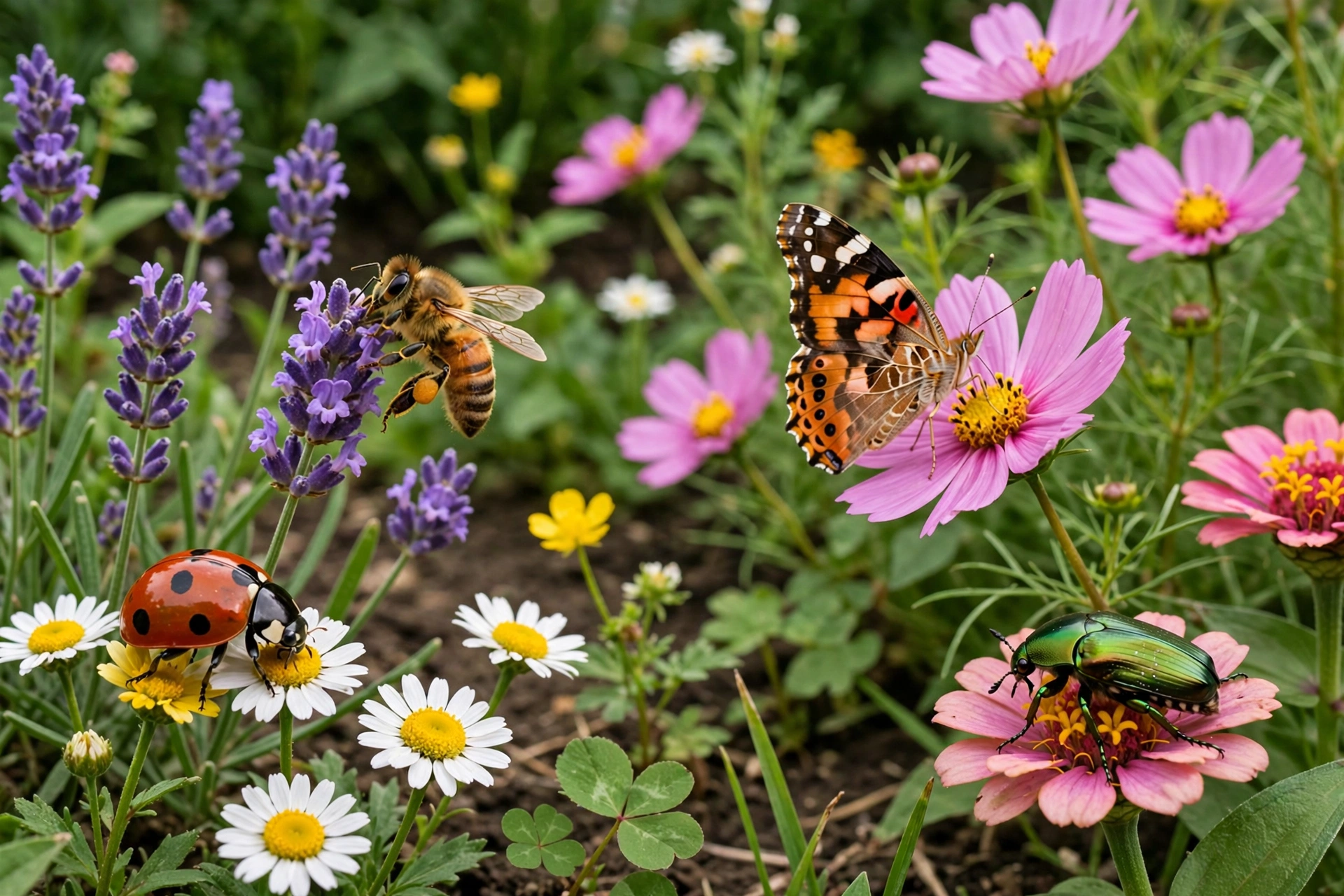
Every garden is full of insects, and most of them are either helpful or harmless. A few can damage plants, but even those are part of a wider ecosystem. The problem is that, at a glance, a helpful ladybird larva can look like a pest, a harmless hoverfly can look like a wasp, and a pollinating bee can be mistaken for something to fear. Learning to tell common garden insects apart helps you protect pollinators, avoid unnecessary sprays, and spot real problems early.
This guide covers the insects you are most likely to meet, how to recognise them, and what to do — or not do — when you find them. You do not need to identify every insect to species. Recognising the broad group and its role in the garden is usually enough to make a good decision. With a little practice, you will start to notice patterns: which insects visit flowers, which ones hunt at night, which ones appear in spring and vanish by summer, and which ones only show up when something in the garden is out of balance. That awareness turns a quick glance into useful knowledge, and it makes gardening calmer, cheaper, and far more rewarding.
Helpful Insects: The Garden's Allies
Bees and hoverflies
Bees are the best-known pollinators. Honeybees are golden-brown and slightly hairy, bumblebees are larger, rounder, and very hairy, and solitary bees vary widely in size and colour. Hoverflies look like small bees or wasps but hover in mid-air, have only one pair of wings, and do not sting. Both groups visit flowers for nectar and pollen, and in doing so they pollinate fruit, vegetables, and flowers.
Ladybirds and lacewings
Adult ladybirds are round, domed, and usually red or orange with black spots, although colours vary. Their larvae look very different — long, dark, and spiky with orange markings — and are often mistaken for pests. Both adults and larvae eat aphids. Green lacewings are delicate, pale-green insects with lacy wings; their larvae also eat aphids and other small pests.
Ground beetles and spiders
Ground beetles are dark, fast-moving beetles that hunt slugs, snails, and other pests at night. They are not plant eaters. Spiders are not insects, but they are important garden predators too. A garden with spiders and ground beetles is usually a healthy garden.
Harmful Insects: When to Act
Some insects do cause real damage, and recognising them early saves plants. Aphids cluster on soft new growth and suck sap, weakening shoots and spreading disease; they also leave sticky honeydew that attracts ants and sooty mould. Cabbage white caterpillars chew large holes in brassicas, while vine weevils attack roots as larvae and notch leaf edges as adults at night. Slugs and snails are not insects, but they are often blamed on insects, and they cause similar chewing damage.
The key is proportion. A few aphids on a strong plant are a food source for ladybirds, not a crisis. A few chewed leaves on an established shrub are cosmetic. Action is worth considering when damage is spreading fast, young seedlings are being eaten, or a crop you depend on is at risk. Even then, start with the gentlest option: a strong jet of water, hand-picking caterpillars, or a beer trap for slugs. Reserve stronger measures for genuine emergencies, and always check the label and the effect on pollinators before using any product.
Step-by-Step: Identify a Garden Insect
Step 1: Photograph it clearly
Take a photo from above and from the side if you can. Include the plant it is on and, if possible, something for scale, such as a leaf or your fingertip at a safe distance. A sharp close-up is far more useful than a distant shot.
Step 2: Count legs, wings, and body parts
Insects have six legs and three body parts: head, thorax, and abdomen. Count the wings: bees, wasps, and flies have different wing numbers, and that alone can separate a hoverfly from a wasp. Note antennae, colour, and shape.
Step 3: Note where and when you found it
Was it on a flower, under a leaf, on the soil, or flying? Was it alone or in a group? Morning, evening, and season all help narrow the identification.
Step 4: Check its role
Is it feeding on a flower, hunting other insects, or eating leaves? Pollinators visit flowers. Predators hunt. Pests cluster and feed on sap or leaves. Behaviour is a strong clue to its role.
Step 5: Confirm with an AI tool
Upload your photo to the Insect Identifier on aitreeidentier.site and compare the result with what you observed. Use it to confirm the group and learn whether the insect is generally helpful, harmless, or potentially harmful.
Encouraging Helpful Insects in Your Garden
The best pest control is a garden that supports predators and pollinators. Grow a mix of flowers that bloom from spring to autumn so there is always nectar available — early bulbs and fruit blossom in spring, lavender and borage in summer, and asters and ivy in autumn. Leave some areas a little wild: a patch of long grass, a pile of leaves, or a corner of nettles supports caterpillars, beetles, and the birds that feed on them. Avoid broad-spectrum sprays entirely if you can, and never spray open flowers in daylight when bees are active. Even organic sprays can harm the insects you want to keep.
Water matters too. A shallow dish of water with a few stones for landing spots helps bees and other insects drink safely on hot days, and a small pond — even a buried bucket with plants — brings in dragonflies, frogs, and pond skaters that all play a part in the garden food web. Keep a simple notebook or phone album of what you see each month. Over a season, you will build a picture of your garden's insect life, and you will notice which plants attract the most helpers.
Common Mistakes to Avoid
Killing ladybird larvae. They look spiky and strange, but they are among the best aphid eaters in the garden. Learn what they look like before you remove anything.
Confusing hoverflies with wasps. Hoverflies do not sting and are excellent pollinators. Check for hovering flight and a single pair of wings.
Spraying at the first sign of aphids. A small aphid colony often brings ladybirds and lacewings within days. Spraying can kill the helpers as well as the pests.
Assuming every caterpillar is a pest. Many become butterflies and moths. Identify first, and tolerate light damage on established plants.
Removing all dead stems in autumn. Hollow stems shelter solitary bees and other insects through winter. Wait until late spring before clearing, and leave some stems standing.
Judging an insect by colour alone. Colour varies within species, and mimics copy dangerous insects on purpose. Use shape, wings, legs, behaviour, and habitat together before deciding what you have found.
FAQ
Are most garden insects harmful? No. Most are helpful or harmless. Only a small number cause serious plant damage, and even those are food for birds and other wildlife.
How can I tell a bee from a wasp? Bees are usually hairier, rounder, and focused on flowers. Wasps are smoother, narrower at the waist, and often attracted to food as well as flowers. Hoverflies mimic both but hover and do not sting.
What should I do if I find aphids? Check the numbers first. A few aphids can be left alone or washed off with water. Encourage ladybirds, and avoid broad sprays that harm pollinators.
How do I attract more pollinators to my garden? Plant a variety of open, nectar-rich flowers that bloom across the seasons, provide a shallow water source, leave some bare soil and hollow stems for nesting, and avoid spraying open flowers. Even a window box or a few pots can make a difference.
What is the black, spiky insect on my roses? It is very likely a ladybird larva. They are long, dark, and spiky with orange or white markings, and they feed on aphids. Leave them alone — they are doing you a favour.
Conclusion
Common garden insects are easier to tell apart once you know what to look for: shape, wings, colour, behaviour, and where you found them. Helpful pollinators and predators do most of the work in a healthy garden, and many supposed pests are harmless in small numbers. Photograph before you act, identify with the Insect Identifier on aitreeidentier.site, and let the helpful insects stay. A garden that welcomes insects is a garden that thrives.
Safety note: Do not handle unfamiliar insects, do not eat or use any wild plant or mushroom based on AI alone, and consult a local expert if you are unsure. If you are allergic to stings, keep a safe distance from bees and wasps.